
Staying Connected in Colombia: The Hidden SIM Card Rules Foreigners Need to Know
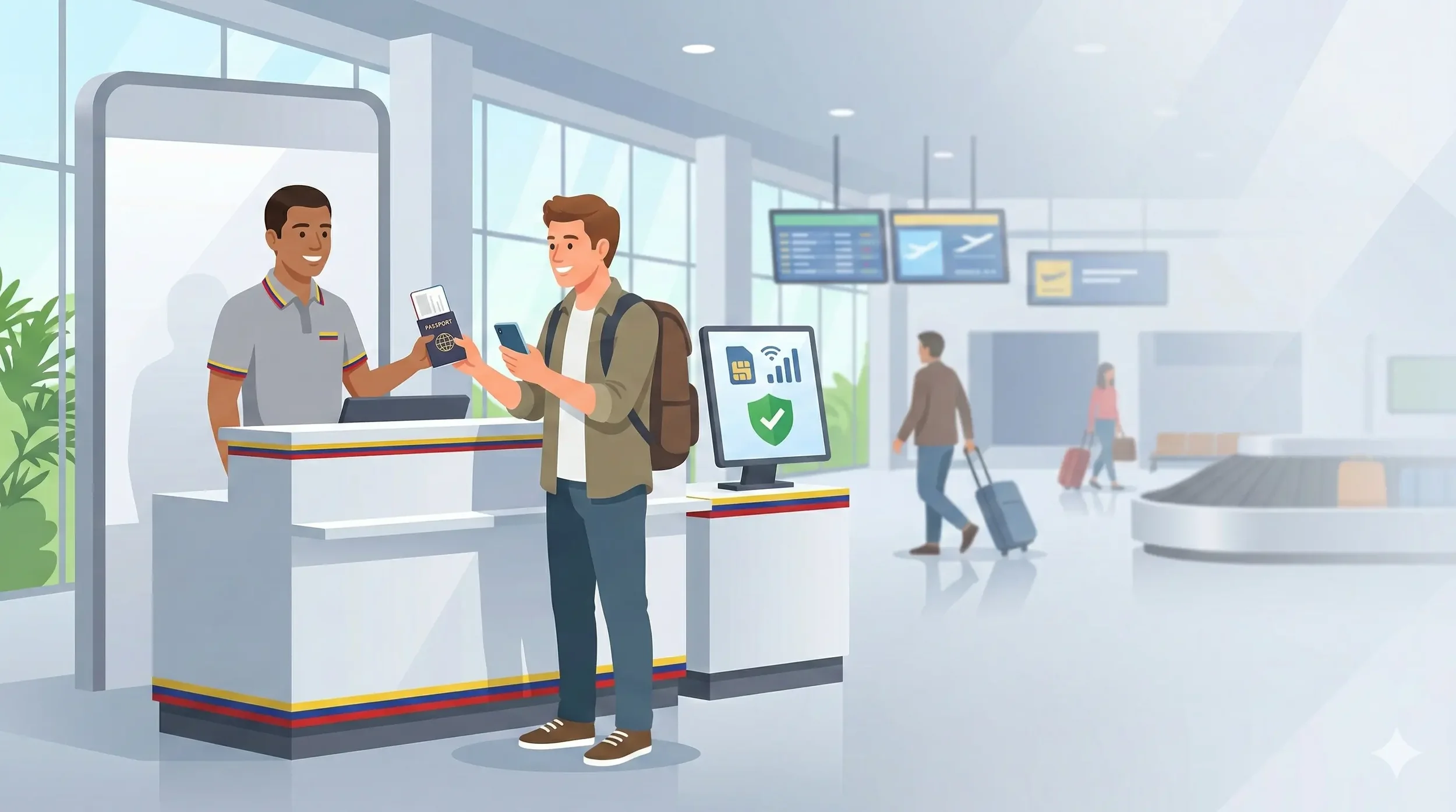
If you are a foreigner in Colombia, buying a prepaid SIM card seems simple: you go to the counter, show your passport, pay, and you are online in minutes. That is exactly what happened to me when I bought my SIM at Medellín airport in 2022. I showed my passport, the staff registered the line, and I never had to go back in person.
But a few weeks later, something strange started happening: Claro began sending me repeated SMS messages telling me that my passport needed to be “reverified” within a certain period or my line could stop working. In my case, the service never actually stopped. Other foreigners, however, have not been so lucky. Some had their lines or even their phones blocked after ignoring similar messages.
This article explains what is going on behind those warnings, why Colombia is so strict with SIM cards, and what you should do so your Colombian number does not suddenly stop working a few weeks after you arrive.
Why SIM and Phone Registration Is a Big Deal in Colombia
Colombia has strict rules about who can use a mobile number and which phones can connect to the network. Unlike in some countries where you can buy a SIM card with no identification, in Colombia every SIM must be linked to a real person, and many phones also need to be registered.
There are two separate but related layers:
SIM registration
The phone number itself must be tied to a real identity. For Colombians, that is usually their national ID card. For foreigners, it is normally a passport. When you buy a SIM, the seller is supposed to enter your personal details into the operator’s system and link that SIM to your name and document number.IMEI (device) registration
The phone has its own unique code, called an IMEI. If you use a foreign phone in Colombia for more than a short grace period (often described as around 20 to 30 days), that IMEI may also need to be registered. If it is not, the phone can be blocked from accessing Colombian networks, even if the SIM card itself has credit and is correctly registered.
Most travelers are told about SIM registration at the moment of purchase, but nobody explains the IMEI part. That is why many foreigners are surprised when everything works fine for a few weeks, and then they start receiving warning SMS about registration or suddenly lose service.
What Usually Happens When You Buy a SIM as a Foreigner
In the ideal scenario, the process looks like this:
You buy a SIM at an official shop or airport kiosk of a major operator such as Claro, Movistar, or Tigo.
The staff ask for your passport, sometimes also a copy or a photo of your passport and your entry stamp.
They create an account in your name, register the SIM to your passport number, activate a prepaid plan, and you can use data and calls within a short time.
This is exactly what happened to me at Medellín airport: I presented my passport, they did all the data entry, and the SIM simply worked.
However, reality is not always so perfectly organized. In many places, especially outside major malls and airports, you may encounter:
Street vendors or small shops selling “ready-to-use” SIM cards that are already activated under someone else’s ID.
Staff who only partially register your data, or who are not familiar with handling foreign passports correctly in the system.
Confusion about whether they are registering just the number or also the phone’s IMEI.
At first, you will not see any problem. Your internet and calls work, and you think everything is fine. Then, after a couple of weeks, the system audits the data and detects a mismatch or a missing registration. That is when the warning messages begin.
Why Those “Reverify Your Passport” SMS Keep Appearing
If you stay in Colombia for more than a very short time, there is a good chance you will receive strange SMS messages from your operator. They may say things along the lines of:
Your line will be suspended if you do not confirm your information.
Your phone must be registered or it will be blocked.
Your document (passport or ID) needs to be reverified.
In my case, Claro sent me multiple automated messages about my passport needing to be reverified within a certain period. I had already bought the SIM with my passport and never changed anything, so it felt random and annoying. The service never actually stopped, but the messages kept coming.
There are several reasons this happens:
Automated checks and generic messages
Mobile operators run automatic checks to verify that both the SIM and the IMEI are correctly linked to a valid ID. If the system sees incomplete data, inconsistencies, or an upcoming deadline, it sends out standard SMS. Those messages are not written personally by a human looking at your specific case. They are generic and sometimes poorly worded, which makes them confusing.Passports vs local IDs
Many systems were originally designed around Colombian ID cards, not foreign passports. As a result, the way passports are handled is not always consistent. One office may register everything correctly with a passport, while another office may claim it is not possible or may enter the data in a workaround way. This inconsistency can trigger periodic “reverification” flags in the system.Mixing SIM and IMEI issues in one warning
The texts often do not clearly explain whether the problem is with your number (SIM) or your phone (IMEI). You might have a perfectly registered SIM but an unregistered IMEI, or vice versa. The result is a vague SMS that tells you to verify your data or risk disconnection, without telling you exactly which part is wrong.
In short, it is possible to receive these messages even when your original purchase and registration were done correctly, like in my case at Medellín airport. The line is properly linked to your passport, so it keeps working, but some automated process still decides to “remind” you repeatedly.
What Happens to Other Foreigners When They Ignore the Messages
Not everyone is as lucky. Many foreigners have had their line or phone blocked after ignoring similar SMS. Typical situations include:
SIM never properly registered
A foreigner buys a SIM in a small shop, does not show any ID, and everything works for a couple of weeks. Then the messages start saying the number must be linked to a document. If they ignore them, outgoing calls and data may be suspended until they go to an official store with their passport and fix the registration.IMEI not registered
Someone brings a foreign phone and uses a Colombian SIM for a month. The system detects that the phone’s IMEI is not registered in the national database. The operator sends warnings with a deadline. If the person does nothing, the phone itself may be blocked from using any Colombian SIM. The SIM card is still valid, but the phone cannot connect to the network.Conflicting answers from different stores
When foreigners try to fix the problem, some branches say, “No, we cannot register with a passport, you need a Colombian ID,” while other branches do it with no issue. In some cases, people are told to involve a Colombian friend whose ID will be used to register the device or the number. That creates an extra layer of dependency and confusion.Different behaviors between operators
Claro has a reputation for being particularly strict with IMEI and registration rules and for enforcing deadlines more aggressively. Movistar and Tigo also have to follow the law, but experiences can vary more from branch to branch. This means that two foreigners can follow roughly the same steps, but end up with very different outcomes depending on operator, location, and the staff who handle their case.
In all of these stories, the common pattern is the same: the person either was not fully registered at the start or did not react to the follow-up warnings. The system is designed to keep pressing until information is complete, and if it is not, it eventually punishes the line or the device.
How to Avoid Having Your Colombian SIM Suddenly Stop Working
If you are planning to stay in Colombia or you are advising other travelers and expats, it helps to turn this chaotic reality into a simple checklist. Here are practical steps to follow:
§Buy from official or reputable points of sale
Choose official operator stores or airport kiosks rather than random street vendors.
Prefer large shopping malls or airport counters where staff are more accustomed to dealing with foreign passports.
Always register the SIM in your own name
§Bring your physical passport.
Make sure the staff register the SIM card under your name and your passport number, not under their own ID or a generic profile.
Ask them to confirm that the line is correctly assigned to your passport before you leave.
§Confirm that your phone (IMEI) is also registered if you will stay longer
If you plan to stay more than a few weeks, explicitly ask about IMEI registration.
Have your phone with you, and know your IMEI number (you can usually get it by dialing *#06#).
If possible, keep a proof of purchase for your phone in case staff ask for it.
§Take warning SMS seriously, but do not panic
If you get messages about verifying your data or registering your device, do not ignore them.
Go to a large, operator-owned store (for example, a big Claro, Movistar, or Tigo store in a mall) with your passport and phone.
Ask staff to check both your SIM registration and your IMEI status in the system and to update anything that is incomplete.
§Avoid trying to fix registration in tiny kiosks
Small kiosks and convenience stores can often sell or top up SIMs, but they may not have the tools or permissions to correct registration problems.
For anything involving documents, passports, or IMEIs, go straight to a full-service branch.
§Consider alternatives if you hate bureaucracy
If you only need mobile data for a short trip and want to avoid all local registration rules, you can use international roaming or a travel eSIM from your home country’s provider or a third-party service.
You will usually pay more than a local SIM, but you remove the risk of being blocked for registration issues.
If you want personal, 1:1 help planning your connectivity, accommodation, and everyday logistics in Colombia so you avoid these kinds of surprises, you can book a paid online consultation with me. I help travelers and digital nomads prepare realistically for life in Latin America, not just the Instagram version.
Conclusion: Buying the SIM Is Only Step One
Staying connected in Colombia is absolutely possible and usually straightforward, but buying the SIM card is only the first step. The real key is making sure both your number and your device are properly registered to you.
My own experience at Medellín airport shows one side of the story: a quick purchase with a passport and a SIM that continues to work despite annoying automated messages. The stories of other foreigners who had their lines or phones blocked show the other side: what happens when registration is incomplete or when those SMS warnings are ignored.
If you understand the rules, buy from the right places, and respond quickly to any messages about verification, you can avoid most of the headaches and keep your Colombian number alive for as long as you need it.
If you are planning a trip or a longer stay and you want expert, honest guidance on topics like SIM cards, neighborhoods, safety, and everyday culture shocks, you can book a 1:1 online session with me. I will review your situation, answer your questions, and help you avoid the most common (and expensive) mistakes foreigners make in Colombia.