
How Long Does It Actually Take To Feel At Home In A New Country? (Timelines For Norway, Bulgaria And Colombia)
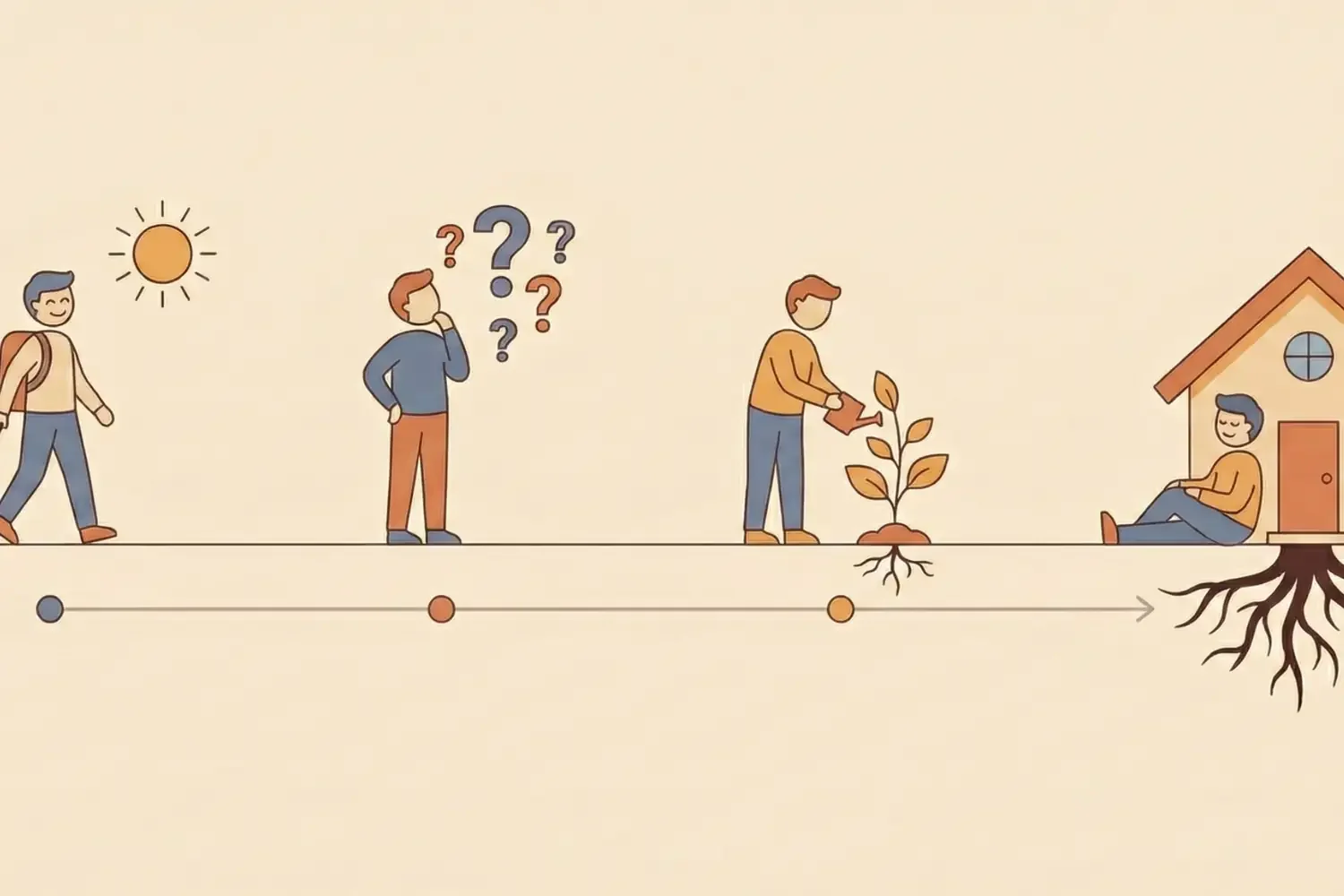
Most relocation advice focuses on logistics: visas, housing, bank accounts. Almost none of it tells you what the first year actually feels like, or when the disorientation finally lifts. This article maps realistic emotional and practical timelines for settling into Norway, Bulgaria and Colombia, so you can set accurate expectations instead of panicking when month three feels harder than month one.
Why timelines matter more than most guides admit
When you move to a new country, two clocks start running. The first is administrative: residence permits, tax registration, local bank accounts, driver's license conversions. The second is emotional: when you stop feeling like a tourist, when you make your first real friend, when you can handle conflict or banter in the local language, when you stop comparing everything to home.
Most people underestimate both timelines, but especially the emotional one. Knowing that feeling lost at month four is normal, or that month eight often brings a second dip before things improve, prevents you from making rash decisions or assuming you picked the wrong country when you are actually just in a predictable adjustment phase.
Month 1: The honeymoon and the paperwork avalanche
In your first month, almost everything feels new, which can be energizing or exhausting depending on your personality. Norway, Bulgaria and Colombia all hit you with a wall of admin tasks: registering your address, applying for your national ID number or residence card, opening a bank account, getting a local SIM card, and figuring out how utilities and healthcare work.
Norway tends to be the most structured but also the slowest. Expect to wait weeks for your national ID number, and until you have it many other processes are blocked. Bulgaria is faster for some things and slower for others, with more informal workarounds but less English language support in government offices. Colombia often feels faster and more flexible on the ground, but documentation requirements can shift depending on which office or official you speak to.
Emotionally, month one is usually a mix of excitement and low level stress. You are still running on adrenaline, and small wins like finding a good coffee shop or figuring out the bus system feel significant. Loneliness has not fully set in yet because you are too busy.
Months 2 to 4: The first emotional dip
This is when most people hit their first rough patch. The novelty has worn off, the admin is still not finished, and you realize you do not actually have friends yet, just friendly acquaintances or transactional relationships. In Norway, this phase is often intensified by the cultural reserve: people are polite but not warm, and spontaneous socializing is rare. If you arrived in autumn or winter, the short days and darkness make everything feel heavier.
Bulgaria during this phase tends to feel more socially accessible than Norway but still requires effort. You will likely connect with other expats or international professionals before you crack into local Bulgarian social circles, which are often tightly knit around school, family or longtime friendships. Colombia generally makes months two to four feel easier socially because of the relational, expressive culture, but you may feel frustrated by your language limitations if your Spanish is still basic.
Practically, this is when you start encountering the small friction points that guides do not mention: how to get a doctor's appointment, why your debit card does not work at certain places, how to navigate unspoken social rules around tipping or greetings. These are not big problems, but they are constant and they add up.
Months 5 to 8: Building routines and hitting the second wall
By month five or six, you have usually established some routines: a weekly grocery run, a coworking space or café you like, maybe one or two regular activities like a language class or a sports group. These routines create a baseline of stability, and for many people this is when things start to feel more manageable.
But month six to eight often brings a second, subtler dip. The excitement is fully gone, you are comparing your life now to your old life more critically, and you may feel stuck between two places: not fully integrated in your new country, but also increasingly disconnected from your old one. In Norway, this is when people often realize that making close friends will take years, not months, and that realization can feel deflating. In Bulgaria, frustration with bureaucracy or infrastructure quirks may build up. In Colombia, the initial social ease may give way to a sense that relationships are warm but surface level, or that safety concerns are wearing on you.
This phase is also when people start to seriously evaluate whether the move was worth it. If you do not have work that feels meaningful, or if your living situation is not quite right, this is when those issues become harder to ignore.
Months 9 to 12: The turning point
Month nine to twelve is often when things either click into place or you decide the fit is not right. By now you have been through a full cycle of seasons, holidays and cultural moments. You have seen how the country functions in summer and winter, during peak vacation season and normal work months. You have a better sense of what is a fixable annoyance versus a fundamental mismatch.
In Norway, if you have stuck with language learning and joined a stable social activity, you will start to see the first signs of deeper friendships forming. Trust builds slowly here, but once it does, relationships tend to be solid and reliable. Bulgaria by this point often feels more familiar, especially if you have figured out how to navigate the mix of formal rules and informal shortcuts that define daily life. Colombia at the one year mark usually feels vibrant and socially rich, and if you have invested in learning Spanish, you will notice how much more access and ease that gives you.
Practically, year one is also when most people finally have their full legal and financial setup locked in: residence permit renewed or extended, local tax situation clarified, bank accounts and payment systems fully functional. The admin burden drops significantly, and you have more mental space for everything else.
Year two and beyond: From surviving to living
Most research on expat adjustment suggests that the two year mark is when people genuinely start to feel at home, assuming the country is a decent fit. By year two in Norway, you will likely have a small circle of people you trust, you understand the cultural codes well enough to navigate them without constant second guessing, and you have built systems that work for your daily life. The darkness and social reserve may still challenge you, but they no longer dominate your experience.
In Bulgaria, year two often means you have figured out how to blend the local and international aspects of life, and you have learned which battles to fight and which inefficiencies to just accept. In Colombia, year two tends to bring deeper language fluency, more integrated social circles, and a much better sense of which neighborhoods, cities or regions suit your risk tolerance and lifestyle preferences.
The key emotional shift in year two is that you stop constantly comparing your new life to your old one. You start to have history in the new place: favorite restaurants that you have been going to for over a year, friends you have known through multiple seasons, local knowledge that feels earned rather than researched.
What speeds up or slows down the timeline
Several factors can make settling in faster or slower. Language effort is one of the biggest accelerators: learning Norwegian, Bulgarian or Spanish does not just help with practical tasks, it signals commitment and opens up access to local culture and humor. Joining structured, recurring activities also speeds things up because it gives you repeated, low pressure exposure to the same people, which is how friendships actually form.
On the other hand, staying mostly in expat bubbles, working entirely in English with international clients, or constantly traveling instead of spending focused time in your new home will slow down integration significantly. If you are always half in and half out, the timeline stretches indefinitely.
Personality also matters. If you are introverted and need a lot of alone time, Norway's quieter social culture may actually feel like a relief rather than a barrier. If you are extroverted and energized by spontaneous social interaction, Colombia will likely feel more natural faster. If you value efficiency and predictability, Norway's systems will feel worth the trade offs. If you prefer flexibility and resourcefulness, Bulgaria or Colombia may suit you better.
Realistic expectations for feeling at home
Feeling at home does not mean everything is easy, or that you never miss your old life, or that you have fully erased your accent and cultural reflexes. It means that on a regular Tuesday, your life feels normal rather than foreign. It means you have people you can call when something goes wrong. It means you know how things work well enough that you are not constantly in problem solving mode.
For most people in most places, that takes at least 18 to 24 months. Norway may take slightly longer because of the social and climate adjustment. Bulgaria and Colombia may feel faster socially but still require time to build stability and trust in your systems. The real work is not picking the perfect country. The real work is committing to the timeline, recognizing which phase you are in, and building the routines and relationships that turn a foreign place into home.