
COMPETITIVE INTELLIGENCE
The Smartsheet Privatization and Enterprise Displacement Strategy
A competitive intelligence teardown produced by Counara. Focused on how Smartsheet's take private and User Subscription Model reshape the renewal battlefield for competing vendors.
FORMAT 29 page written report DATE May 2026
FOCUS Work management, pricing strategy, displacement
Core thesis
Smartsheet remains technically formidable, but its PE driven pricing and licensing shifts have opened a narrow, time sensitive displacement window in the 50 to 500 user segment.
USM and provisional seat mechanics drive renewal and plan change shocks of 30 to 100 percent plus for collaborator heavy accounts.
Control Center, DataMesh, and Data Shuttle keep the backend moat real, but the economic trust that justified the complexity has fractured.
Winning vendors do not rely on "nicer UI" positioning, but on renewal interception and migration as a service motions.
This piece was written for vendor side strategy, product marketing, GTM, and CI leaders. It is not an end user migration guide.
The report consolidates public evidence from procurement advisors, SaaS management platforms, institutional buyers, Smartsheet's own communication, and competitor or partner narratives into a single, decision ready view of what is happening to pricing, renewals, and displacement opportunities.
INSIDE THE TEARDOWN
REPORT STRUCTURE
What the full analysis covers
-
High level overview of the strategic opportunity created by Smartsheet's take private acquisition and aggressive pricing restructure, highlighting key insights, mid market vulnerability, and core recommendations for competitors looking to capture share
-
Analysis of the collaborative work management landscape, positioning Smartsheet against rivals such as monday.com, Asana, and ClickUp, with macro trends, competitor vulnerability profiles, and the structural threat of Microsoft 365 consolidation.
-
Breakdown of Smartsheet's core technical capabilities, especially enterprise grade governance tools like Control Center and Data Shuttle, contrasted with key weaknesses like a dated UI, steep learning curve, and gated AI features.
-
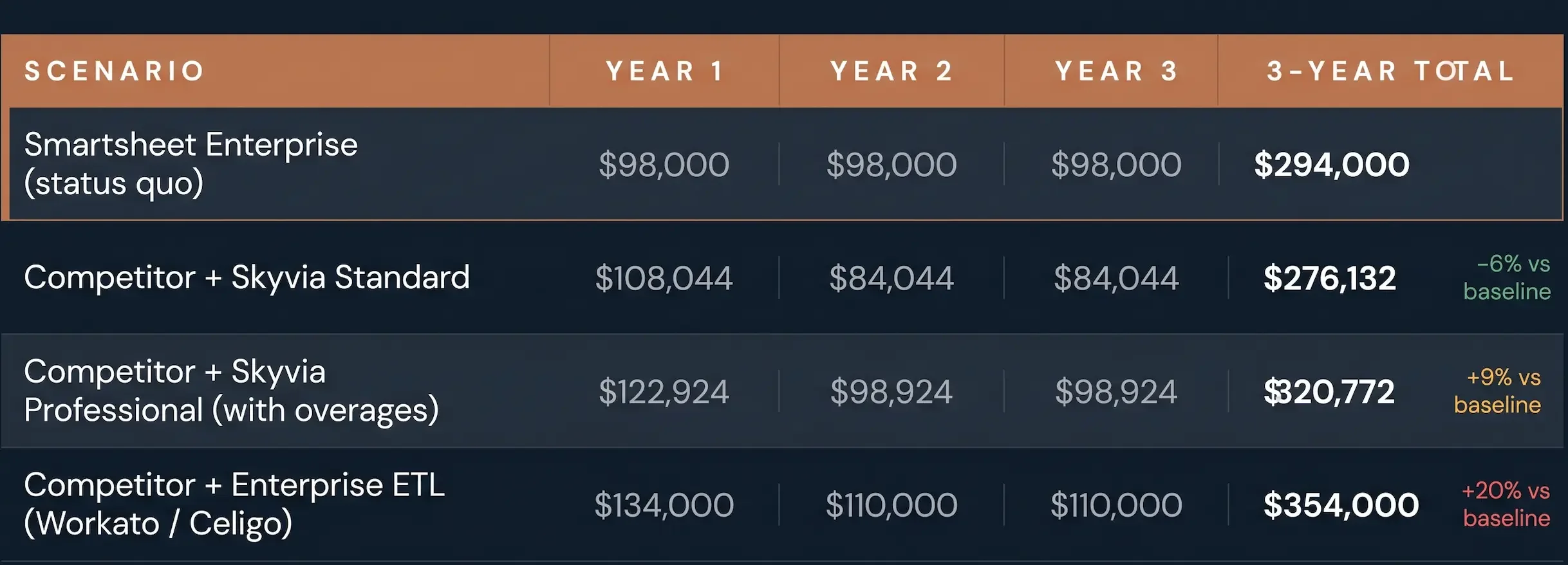
Examination of Smartsheet's subscription tiers and the cost implications of the 2024–2025 User Subscription Model transition, including elimination of free internal collaborators and a three year total cost of ownership comparison versus a hypothetical competitor plus middleware.
-
Overview of Smartsheet's targeted industries, roles, and roadmap, including its shift toward agentic AI and deep enterprise governance, with analysis of the implementation partner network and an economic framework competitors can use to recruit partners.
-
Identification of major risks for competitors, such as Microsoft 365 as an alternative migration path, and key opportunities like the current wave of renewal price shocks, plus advice on using AI accessibility and productized migrations to win frustrated accounts.
-
Actionable sales and marketing campaigns aimed at intercepting Smartsheet customers before they sign discounted multi year lock ins, with emphasis on the 50–500 user segment and messaging around predictable pricing, AI democratization, and admin light governance.
-
Technical and operational phases for moving from Smartsheet's spreadsheet native model to an object oriented platform, including resource estimates, timeline ranges from a weekend to 12 weeks, and guidance on managing adoption risks through phased rollout.
-
Quick reference guide summarizing Smartsheet's advantages and vulnerabilities, objection handling scripts, and specific landmine questions sales teams can use to surface pain around pricing, true up bills, and administrative overhead.
-
Conclusion that Smartsheet's aggressive monetization creates a rare, time sensitive window to capture fleeing market share, stressing that successful displacement must solve pricing, architecture, and change management together, not just offer a better interface.
-
Explanation of the structured open source intelligence approach, criteria for source reliability and bias weighting, plus five primary research actions (such as win loss interviews) that could further strengthen the analysis.
-
Catalog of the 33 public data points, articles, and reviews used, organized by source type, spanning company communications, financial and procurement benchmarks, partner insights, and competitive documentation.
SELECTED VISUAL EXCERPTS
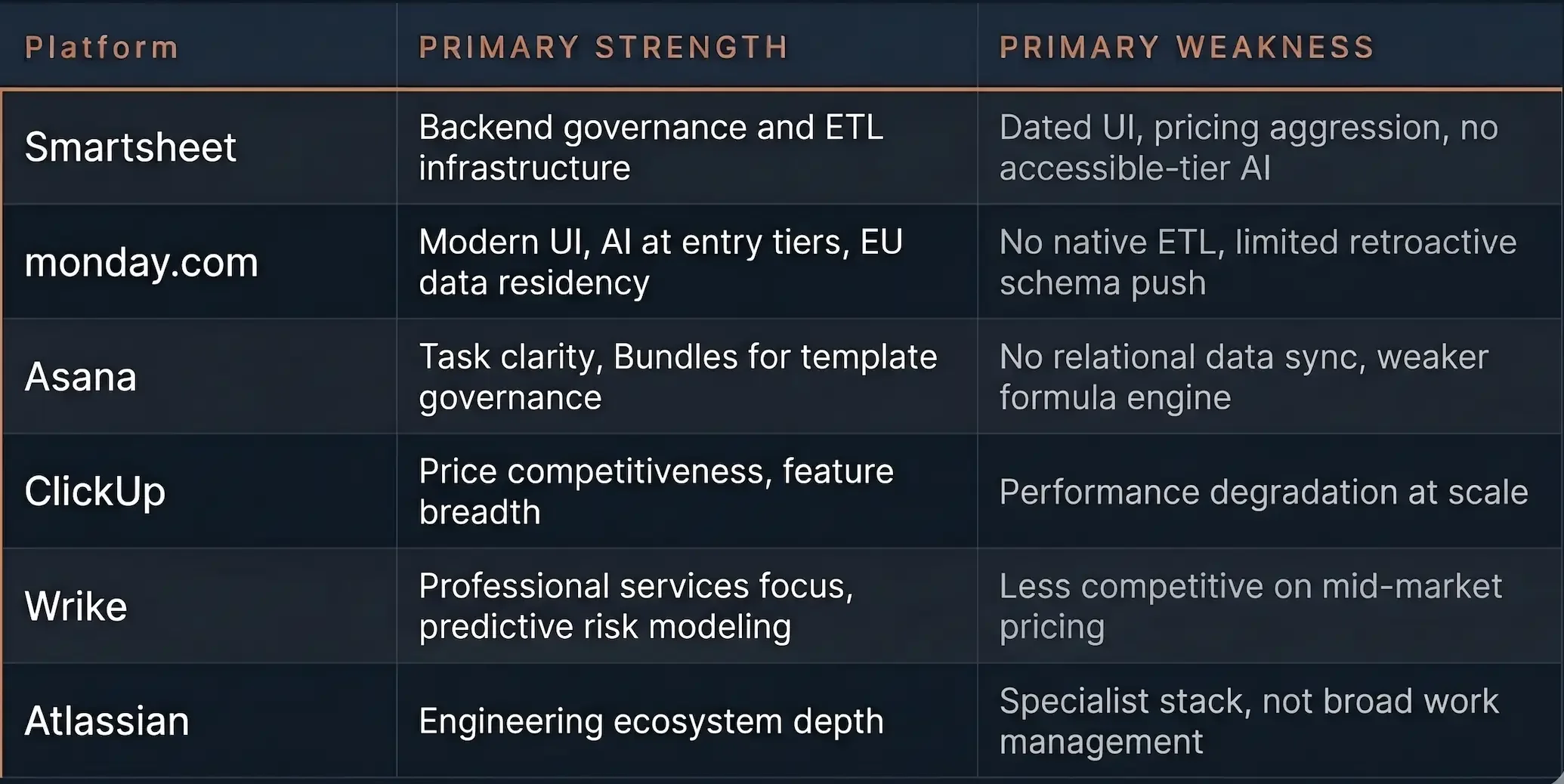
Excerpt Competitive comparison table - Abridged for portfolio display
Excerpt TCO Aggregated Summary: Annual Totals & Variance Overview
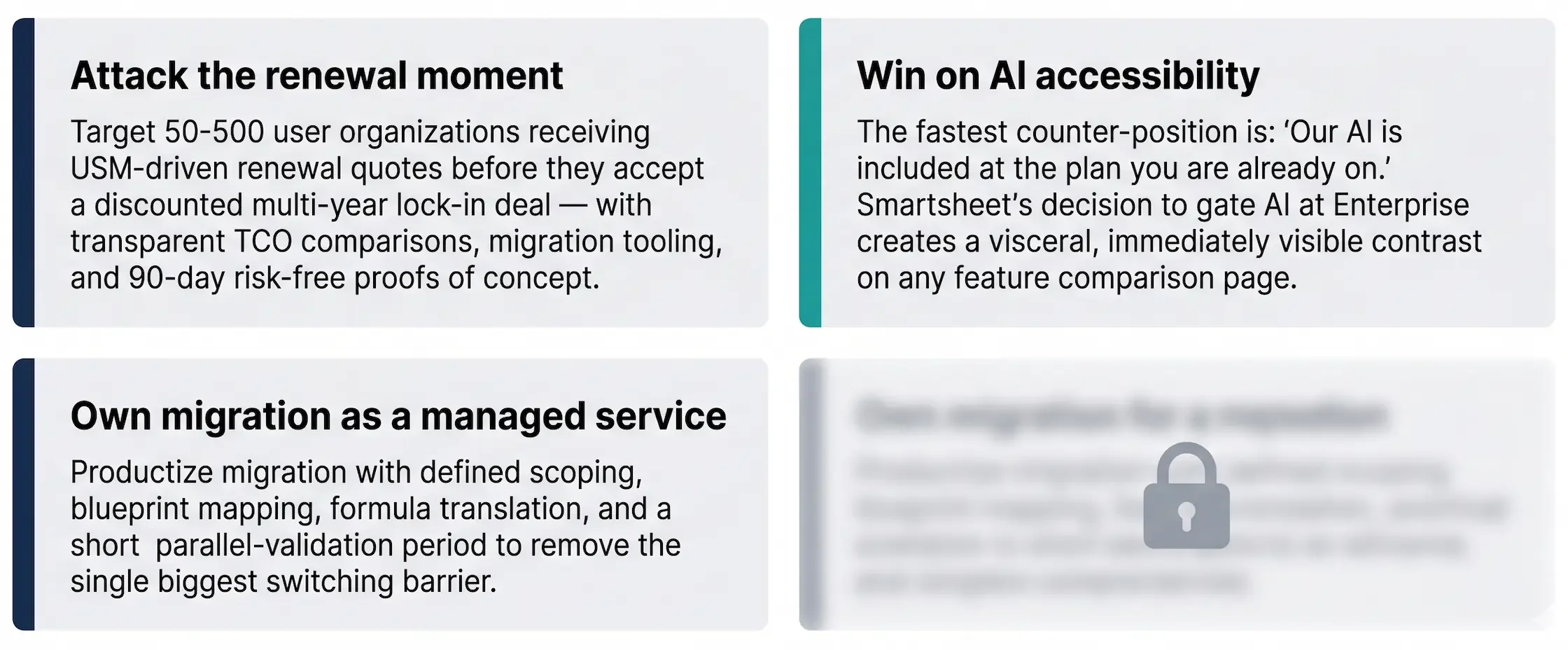
If I Were Your Strategist - Abridged Excerpt
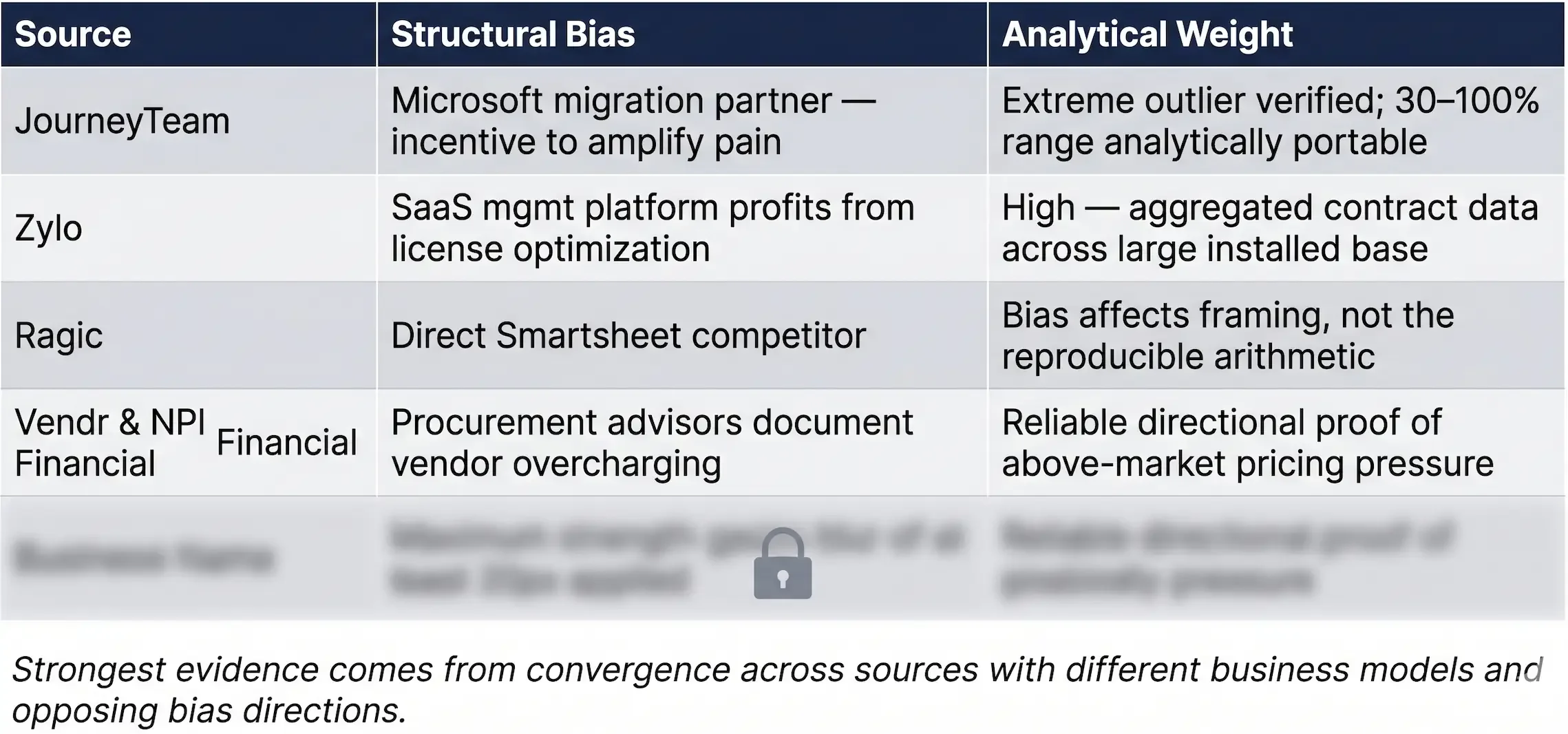
Source Credibility & Bias Assessment - Selected Sources (Abridged)
HOW THIS RESEARCH WAS DONE
EVIDENCE STANDARD
Named, verifiable, bias aware
Every quantitative claim in the teardown is tied to a named institution, organization, or verified platform. No anonymous forums, no unattributed screenshots, and no "a source told me" statements.
Each source is assessed for its structural incentives. For example, Microsoft partners promoting migrations, SaaS management platforms that profit from exposing unused licenses, and Smartsheet's own marketing and earnings communication.
Conclusions are treated as strong only where differently incentivized actors still converge, such as on the scale of renewal increases and the deliberate shift away from SMB towards enterprise.
ANALYTICAL APPROACH
From evidence to plays
The analysis combines detailed reading of public sources with scenario modelling and practical framing for strategy and GTM teams.
Map pricing mechanics, contract patterns, and renewal stories into a clear model of where commercial pain is concentrated.
Translate technical strengths and weaknesses into positioning levers, not just feature checklists.
Design plays that sales and partners can actually execute, with timing, target segments, and migration envelopes defined.
Commission similar competitive intelligence for your own market
This Smartsheet teardown is a portfolio example of how Counara approaches competitive intelligence and strategic research. The same level of depth can be applied to your own key competitors, pricing shifts, or displacement opportunities.
Vendor side only: strategy, product marketing, competitive intelligence, and GTM leadership roles.
Asynchronous work: written reports, decision memos, and structured research. No calls required unless explicitly requested.
Scoped engagements: from focused competitor teardowns to broader market and go to market landscape work.
Include your role, organization, and the competitive question you want answered. A short written scope and fee range will be provided in reply.
Counara | Strategic Research and Competitive Intelligence